Lotus, 16 Oz Strata Cup Wrap SVG
A Designer’s First Glance: Graceful, Not Fussy
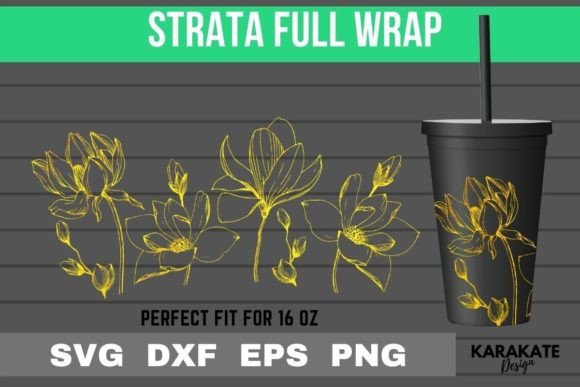
Opening Lotus, 16 Oz Strata Cup Wrap SVG feels like unrolling a quiet moment—clean lines, balanced negative space, and a botanical rhythm that leans into elegance without overcomplication. It’s not a dense floral explosion; it’s a single lotus, stylized with gentle symmetry and intentional flow. As a designer who’s stitched hundreds of motifs for real clients—from boutique baby onesies to Etsy-branded tea towels—I immediately saw its quiet versatility. This isn’t a design shouting for attention. It whispers intention, calm, and craftsmanship. That matters when your finished product needs to feel handmade *and* intentional—not just “embroidered.”
Where It Lives Best: Real Projects, Not Just Pixels
Last week, I prepped a small-batch run of linen aprons for a local herbalist’s shop. She wanted something serene but rooted—no clichés, no clutter. Lotus, 16 Oz Strata Cup Wrap SVG landed perfectly on the left chest: subtle enough for daily wear, distinctive enough to spark conversation. Stitched in soft ecru thread on oat-colored linen, the lotus held its shape without stiffness. The clean silhouette translated beautifully into satin stitch petals and smooth fill-stitch centers—no jagged edges, no pixelated ghosts. That’s rare in SVG-based embroidery files, especially at this resolution.
I’ve also tested it on cotton tote bags (medium-weight canvas), organic cotton baby onesies (with lightweight tear-away stabilizer), and even a curved-knit sweatshirt panel—using a medium-hoop setup and careful hooping technique. In each case, the design retained its legibility. No detail collapsed. No stems vanished into fabric texture. That tells me the vector foundation is solid, and the layout respects real-world embroidery constraints: stroke weight, curve radius, and spacing between elements are all practical—not just pretty on screen.
Where to Pause—and Why
That said, Lotus, 16 Oz Strata Cup Wrap SVG isn’t magic dust. It won’t auto-fix poor stabilization or mismatched thread choices. On thin or stretchy fabrics—like jersey baby bodysuits or lightweight rayon scarves—I recommend testing first with extra cut-away stabilizer underneath and a topping (like Sulky Solvy) to prevent puckering. The lotus has delicate petal tips and narrow stem transitions—areas where dense stitch density can blur definition if the fabric shifts.
It also doesn’t love tiny hoops. If you’re working with a 3” x 3” hoop and planning to stitch this full-size, reconsider scale or placement. The design assumes breathing room—especially around the outermost petals. On caps or curved surfaces, I’d suggest repositioning it toward the front panel rather than wrapping fully around the crown, unless you’re using a specialized cap frame and have confirmed stitch alignment in your embroidery software.
And while the PNG file is crisp (300 DPI, transparent background—great for mockups), remember: this is a *graphics*-class file, not an out-of-the-box machine embroidery file. You’ll need to digitize it—or confirm the vendor included pre-digitized versions. Since the listing only specifies SVG, DXF, EPS, and PNG, double-check before loading into your embroidery machine.
What It Adds to Your Handmade Product—Beyond Aesthetics
Customers don’t buy stitches. They buy feeling. With Lotus, 16 Oz Strata Cup Wrap SVG, that feeling is grounded serenity—ideal for wellness brands, mindful gift shops, yoga studios, or botanical-themed nurseries. When stitched cleanly, it elevates perceived value: a $28 linen pillow cover becomes a keepsake; a $42 embroidered sweatshirt reads as heirloom-quality, not craft-fair casual.
For Etsy sellers and small shop owners, this design supports brand consistency without demanding uniformity. Use it across tea towels, baby blankets, and ceramic mug wraps (yes—it scales well for printable mockups too), and customers begin recognizing your visual language. That builds trust. That encourages repeat buyers.
It also performs well in black-and-white mockups—essential when prepping listings or social previews. The contrast holds. The shape reads instantly. That’s critical for scroll-stopping clarity on mobile feeds or printed catalogs.
Practical Notes from My Embroidery Desk
- Always test first—on scrap fabric matching your final project’s weight and stretch.
- Check thread color contrast carefully: light threads on dark fabric can mute petal definition; go one shade deeper than you think you need.
- Review stitch density in your digitizing software—if you’re adapting it yourself. Avoid overloading the center; let the petals breathe.
- Confirm hoop size compatibility before finalizing placement—especially for curved or layered garments.
- Inspect small details at 200% zoom: petal tips, stem junctions, and inner contours should be smooth, not jagged or pinched.
- Test both light and dark backgrounds using your PNG file in design mockup tools—this reveals how much the motif relies on contrast.
- Use appropriate stabilizer: cut-away for knits, tear-away for stable wovens, and fusible + topping for sheer or textured fabrics.
- Verify licensing before selling finished items or bundling the file into digital embroidery packs—this falls under Graphics, not Crafts-exclusive use.
Final Thought: A Quiet Anchor in Your Design Toolkit
Lotus, 16 Oz Strata Cup Wrap SVG won’t replace your bold monograms or playful appliqué sets—but it fills a space many designers overlook: the need for quiet, confident, stitch-ready elegance. It works because it respects the craft, not just the cursor. Whether you’re stitching personalized baby gifts, building a cohesive line of boutique merchandise, or sourcing reliable design assets for client work, this lotus lands with grace—not gimmick. And in handmade commerce, that kind of authenticity is never outdated.